
Case for Support
Build Your Future Summit
Real Estate. Trades. Wealth. | An Initiative of Ani Empowerment Group, 501(c)(3)
About the Build Your Future Summit
The Build Your Future Summit is the flagship entrepreneurship and workforce development initiative of Ani Empowerment Group, a 501(c)(3) nonprofit based in the Chicagoland area. Founded in 2022 as the Black Male Real Estate Expo, the Summit expanded in 2025 under its current name to reflect a broader, inclusive vision while maintaining its core commitment to young people who have been furthest from opportunity in real estate and the construction trades. Now in its fourth year, the Summit is an annual, full-day event featuring workshops, mentorship, networking, and direct connections to careers and business ownership in these industries.

Who Is Behind This Work
The Build Your Future Summit is run by practitioners, scholars, and institution builders with direct standing in every field the Summit addresses.
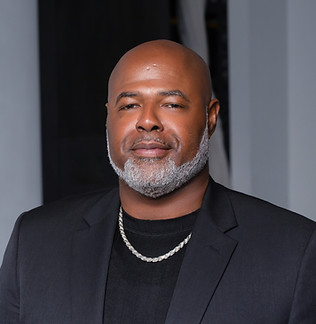
Lutalo McGee, CEO of Ani Empowerment Group and founder of the Summit, is a licensed real estate broker with nearly two decades of active practice in Chicago. He currently serves as President of the Chicago Association of REALTORS® (2025-2026), 1st Vice President of the Dearborn Realtist Board, and as a Trustee of the Appraisal Foundation, the national body that sets appraisal standards in the United States. He has been quoted on housing equity in the Chicago Sun-Times, Crain's Chicago Business, NBC Chicago, and NAR REALTOR® Magazine, and is cited in the 2025 State of Black Chicago for advancing community-driven homeownership solutions.

Dr. Darnell Bradley, Vice President and Chief Program Officer, holds an EdD in Adult and Higher Education and serves as Director of Curriculum at the Institute of Coaching at Harvard University. A former professor of doctoral leadership studies with 16 years of faculty experience, he holds a Real Estate New Broker Orientation certificate, connecting adult learning expertise directly to the industries the Summit serves.
_.jpg)
Dr. Tinaya York, President, holds a PhD in Education and is a certified Reading Specialist with over 20 years in Chicago Public Schools. Her research on adolescent readers has been published in Education Week and recognized with the Illinois Reading Council's Mattie Williams Literacy Award.
The Wealth Gap These Industries Can Close
Real estate and the construction trades are two of the most direct pathways to generational wealth in America. Homeownership accounts for approximately 65% of median net worth for Black families. Yet significant wealth gaps persist across communities of color:
-
Black households represent just 6% of total U.S. housing wealth despite comprising 12% of all households, with median net worth of $0 in Chicago.
-
Latino households hold approximately 2.4% of U.S. housing wealth despite comprising nearly 19% of all households, with median net worth of $45,000 versus $200,000+ for white households.
-
Asian American households, despite aggregate income figures that frequently mask deep internal disparities by ethnicity, immigration status, and geography, face a homeownership gap of nearly 14 percentage points below white households nationally and remain significantly underrepresented in real estate entrepreneurship and construction trades ownership -- industries where access and relationships have historically determined who is allowed to build wealth.
The Representation Gap
In real estate, the barriers to entry create stark underrepresentation. Asian Americans comprise less than 5% of real estate brokers and agents nationally despite representing nearly 6% of the U.S. population -- and this figure obscures even lower representation among specific Asian ethnic communities, particularly recent immigrants and first-generation households who navigate the industry without access to professional networks or culturally competent guidance. Latinos comprise approximately 8% of real estate agents and brokers despite representing 19% of the U.S. population. Black professionals comprise just 4.2% of the real estate industry nationally.
In construction trades, the gaps are even wider. Asian Americans represent just 2.1% of the construction workforce nationally despite comprising nearly 6% of the U.S. population, and an even smaller fraction of construction business owners and project managers. Latinos comprise approximately 28% of construction workers yet hold only 7% of construction management positions and own less than 5% of construction companies. Black workers represent 6.7% of construction jobs and just 5.3% of management positions.
These underrepresentations in ownership and management roles directly limit wealth-building opportunities within these communities.
Sources: 2025 State of Housing in Black America (SHIBA), NAREB; Federal Reserve DFA; U.S. Census Bureau, American Community Survey 2023; NAR Member Profile Data 2024; Pew Research Center, Latino Workforce Trends (2024); EEOC Construction Industry Diversity Report; Urban Institute, Asian Americans and Homeownership (2022); HMDA data, Consumer Financial Protection Bureau (2023); LendingTree analysis of 2024 U.S. Census Bureau Annual Business Survey.
Homeownership Barriers Are Worsening
The Black homeownership rate in 2024 stands at 45.8% compared to 74.3% for white households -- a 28.5 percentage point gap wider than it was in 1968. Latino homeownership stands at 48.2%, still significantly below white rates. Asian American homeownership sits at approximately 60.7% nationally -- a figure that, while higher than Black and Latino rates, still reflects a nearly 14 percentage point gap below white households and conceals significant variation among Asian ethnic subgroups, many of whom face denial rates, language barriers, and a lack of culturally competent lending that are invisible in aggregated data. In Chicago, these gaps compound across all communities of color and exceed 30 percentage points for Black and Latino households.
Lending discrimination compounds the problem. Black applicants face a 35% comprehensive loan failure rate versus 24% for white applicants. Black borrowers pay $8,481 in upfront loan costs -- 42% more than white borrowers. Latino and many Asian American borrowers similarly face higher denial rates and closing costs, particularly among recent immigrant and limited-English-proficiency households.
Appraisal bias suppresses wealth. NAREB research shows appraised values decline as the proportion of Black buyers rises in any neighborhood. Homes in predominantly Black neighborhoods are undervalued by 21-23% compared to comparable homes in white neighborhoods, suppressing approximately $156 billion in Black household wealth. Similar devaluation patterns occur in Latino neighborhoods.
Institutional investors now account for 30% of single-family rental purchases (up from 19% in 2019) and disproportionately target neighborhoods with high concentrations of Black and Latino residents, pricing out first-time homebuyers competing with cash offers.
Sources: 2025 SHIBA, NAREB; NAR 2025 Snapshot of Race and Home Buying in America; NAREB, Home Appraisals in Black and White (2024); Federal Reserve Bank of Philadelphia, Investor Participation Patterns (2025); Urban Institute, Asian Americans and Homeownership (2022); HMDA data, Consumer Financial Protection Bureau (2023).
The Construction Trades Crisis -- and the Opportunity
The construction industry faces an urgent workforce shortage: the Associated General Contractors of America projects 499,000 new workers needed in 2026, with 41% of the current workforce retiring by 2031. Yet the industry struggles to recruit young people and workers of color -- precisely the populations the Summit reaches.
In Chicago, Black workers represent just 2.7% of construction workers despite comprising 30% of the city's population. Latino workers comprise 28% of the construction workforce but hold only 7% of management positions, indicating limited advancement pathways. Asian Americans represent just 2.1% of the national construction workforce -- a figure that drops even further at the ownership and management level -- reflecting barriers that are less visible but equally real: exclusion from the informal networks through which contracts, apprenticeships, and business opportunities are distributed; underrepresentation in trade associations and licensing pipelines that serve as professional on-ramps; and an industry culture that has been slow to reflect the diversity of the communities it builds.
Asian American-owned construction companies represent a fraction of 1% of all construction organizations. Latino-owned construction firms, while more prevalent, still account for less than 5% of the industry.
The Summit addresses this shortage head-on by connecting young people from underrepresented communities directly to apprenticeships, mentors, and business ownership pathways.
Sources: 2025 State of Black Chicago, Chicago Urban League (ACS 2023 data); AGC / ABC 2026 Workforce Projections; NCCER; Harvard Joint Center for Housing Studies, Rebuilding the Construction Workforce (2024); U.S. Census Bureau, American Community Survey 2023; EEOC Construction Industry Diversity Report; LendingTree analysis of 2024 U.S. Census Bureau Annual Business Survey.
Our Impact
Over 600 high schoolers, young adults, and community members have participated in the Summit across four years. 86% reported being inspired to pursue careers in real estate or the construction trades. 93% would recommend the Summit. Over $57,000 has been invested by community and business partners.
The Return on Investment
Every dollar invested in youth workforce development yields $4 to $12 in reduced criminal justice costs, increased tax revenue, and community stabilization. McKinsey estimates the U.S. has lost $26 trillion in potential economic growth since 2000 due to wealth inequality. Investment in the Build Your Future Summit is investment in the workforce the construction industry desperately needs and the homeowners these communities deserve.
Sources: NBER; Urban Institute; McKinsey & Company, The Economic Impact of Closing the Racial Wealth Gap (2019).
Lutalo McGee, CEO & Director | Dr. Tinaya York, President & Director | Dr. Darnell Bradley, Vice President & Director
Ani Empowerment Group | 501(c)(3) | EIN: 47-4390505 | aniempowermentgroup.org
